Little did I know that Tromeo and Juliet is the festering petri dish of more than a few careers. It looks like a mad, mad, flatulent, raunchy, frayed retelling of Shakespeare's love story for all time. With a great extended nude scene. And a nipple piercing on camera. And a happy incestuous ending. Murder and car wrecks, yes, but strangley, no cannibalism.
So I'm out of touch. James Gunn wrote the script for $150 and according to the guy, it was juicier and fouler in early drafts. Gunn has gone on to kick the Man in the nuts with the Scooby Doo projects and the soon-to-be-released Slither. If you have seen Tromeo, you'll see where Gunn got the idea to use a curling iron to exterminate a vampire slug. Besides my retired mother, does anyone use curling irons anymore? As I said, I'm out of touch.
Tromeo, namely Will Keenan, has gone on to a hyphenate career that includes a performance in The Enternal Sunshine of the Spotless Mind. Jane Jenson, who turns in a creditable performance without clothes, has become a musician. Lloyd Kaufman, still producing and directing, is also distributing Jenna Fischer's (The Office, wife of James Gunn) Lollilove, the trailer for which looks hilarious. Lloyd is the oft-cited crazy ass of this post. Keep on rockin' in the free world, L!
Lessons:
1. Really good, talented people also work on crazy-ass movies.
2. Free your mind and the rest will follow. Or, making a movie does you more good than not making one that's a wierd, crazy-ass, brainfart.
Sunday, March 26


Saturday, March 25
"That was awesome, dude," he lied
There's a small and fiercely independent festival in Boston. So small I often miss it. Not this year. It runs through tomorrow night.
What it is: it's about getting films made. It's about encouraging film makers. It's about giving some spotlight to the little, the credit-card funded, the erstwhile next master of gore/horror/broad satire.
What I learned: That if you're going to make crazy-ass movies to showcase you and your abilities, you're going to work with some brilliant people and some crazy ass nut jobs. Here's an example. Today, I went to a frowsy, abbreviated version of Lloyd Kaufman's 'Make Your Own Damn Movie' Seminar. The key topics came as stories and making-of shorts and stand-up riffing on the Axis of Evil formed by corporations and, well, money, which produces, he says, "babyfood" from Hollywood.
Kaufman - this is all news to me - has been making Troma films for 35 years. His new title in postproduction? Poultrygeist: Night of the Chicken Dead. He wanted freedom, not money, he said in refrain. He got exactly what he wanted. But Oliver Stone, Trey Parker, and James Gunn have worked for him. Tonight I'm going to see the anniversary showing of Tromeo and Juliet. More anon, dear reader.
While Stone, Parker, and Gunn have given up 'freedom,' going to work for the Axis of Evil, they now make movies that millions see. They make movies that wouldn't be possible for a half mil, the figure Kaufman gave as typical of recent Troma budgets. "Independent" is an approach, but also an attitude, politics, and eventually a self-limiting choice. "Doesn't play well with others" becomes "doesn't get to play." No wonder Kaufman's set up his own game his own way. I just don't get all the complaining about studios. They make a damn fine product. Nobody eats babyfood forever.
And that brings me to a program of shorts. Many of these were very solid efforts. Some great filming, editing, or acting. Good storytelling in few. Again I say, "You got your movie made! That was awesome, dude." Because you can probably get another at-bat. But I attended the shorts with TWIL, who loves me, not film. She was not entertained, delighted, fightened, or provoked to thought. She was bored and often confused. "Awesome," I lied.
So raise a light beer to everyone who made an okay movie. Because I'm glad you learned the thousand things you taught yourself. But the product. Dude! I'm totally lying. I'm thinking about the leftover Indian food in my refrigerator. Get back to work, damn it! And when you see my short, tell me the friggin' truth.
What it is: it's about getting films made. It's about encouraging film makers. It's about giving some spotlight to the little, the credit-card funded, the erstwhile next master of gore/horror/broad satire.
What I learned: That if you're going to make crazy-ass movies to showcase you and your abilities, you're going to work with some brilliant people and some crazy ass nut jobs. Here's an example. Today, I went to a frowsy, abbreviated version of Lloyd Kaufman's 'Make Your Own Damn Movie' Seminar. The key topics came as stories and making-of shorts and stand-up riffing on the Axis of Evil formed by corporations and, well, money, which produces, he says, "babyfood" from Hollywood.
Kaufman - this is all news to me - has been making Troma films for 35 years. His new title in postproduction? Poultrygeist: Night of the Chicken Dead. He wanted freedom, not money, he said in refrain. He got exactly what he wanted. But Oliver Stone, Trey Parker, and James Gunn have worked for him. Tonight I'm going to see the anniversary showing of Tromeo and Juliet. More anon, dear reader.
While Stone, Parker, and Gunn have given up 'freedom,' going to work for the Axis of Evil, they now make movies that millions see. They make movies that wouldn't be possible for a half mil, the figure Kaufman gave as typical of recent Troma budgets. "Independent" is an approach, but also an attitude, politics, and eventually a self-limiting choice. "Doesn't play well with others" becomes "doesn't get to play." No wonder Kaufman's set up his own game his own way. I just don't get all the complaining about studios. They make a damn fine product. Nobody eats babyfood forever.
And that brings me to a program of shorts. Many of these were very solid efforts. Some great filming, editing, or acting. Good storytelling in few. Again I say, "You got your movie made! That was awesome, dude." Because you can probably get another at-bat. But I attended the shorts with TWIL, who loves me, not film. She was not entertained, delighted, fightened, or provoked to thought. She was bored and often confused. "Awesome," I lied.
So raise a light beer to everyone who made an okay movie. Because I'm glad you learned the thousand things you taught yourself. But the product. Dude! I'm totally lying. I'm thinking about the leftover Indian food in my refrigerator. Get back to work, damn it! And when you see my short, tell me the friggin' truth.
Thursday, March 16
Falling in love again, never thought I would
No excuses here for not posting, but after being underemployed, a few appointments feels like a full schedule.
I love a serial killer. Do you?
Or the genre, at least. I've been doing a little research, which shows that this well-mined vein is full of great successes and failures. The obvious high point is Silence of the Lambs. I'm working on a post that extracts some of the story elements that audiences seem to enjoy and will share it after watching some more examples.
Join the fun by suggesting your favorite serial-killer thrillers. Here's the selective filmography I'm using:
Seen
Yet to see
I love a serial killer. Do you?
Or the genre, at least. I've been doing a little research, which shows that this well-mined vein is full of great successes and failures. The obvious high point is Silence of the Lambs. I'm working on a post that extracts some of the story elements that audiences seem to enjoy and will share it after watching some more examples.
Join the fun by suggesting your favorite serial-killer thrillers. Here's the selective filmography I'm using:
Seen
Silence of the Lambs Se7en Sea of Love Bloodwork
Yet to see
Obviously, serial-killer thriller is a sub-genre of the thriller. Feel free to expand my horizons, keeping in mind that life is short. Don't even tell me you don't have opinions!Murder by Numbers Tightrope Ted Bundy
Monday, March 6
Bobby Moresco, we love your story
Read this story: The Long March, then the Countdown to Oscar Glory
Highlights: Bobby takes acting lessons in NYC, stinks, wants like a hungry man wants food a different future than construction, longshoreman, so he goes to L.A. His brother is murdered, so Bobby goes back to NYC, works, and writes a play about his brother's murder. Producer sees the play, Bobby goes back to L.A., works, meets Paul Haggis, then doesn't work, goes sort of broke, and writes Crash with Haggis. No one wants to make it. They make it. Now he's working. He's 54. All this because he didn't want to work construction and his wife didn't make him stop with the crazy writing thing.
Bobby, we salute you!
Highlights: Bobby takes acting lessons in NYC, stinks, wants like a hungry man wants food a different future than construction, longshoreman, so he goes to L.A. His brother is murdered, so Bobby goes back to NYC, works, and writes a play about his brother's murder. Producer sees the play, Bobby goes back to L.A., works, meets Paul Haggis, then doesn't work, goes sort of broke, and writes Crash with Haggis. No one wants to make it. They make it. Now he's working. He's 54. All this because he didn't want to work construction and his wife didn't make him stop with the crazy writing thing.
Bobby, we salute you!
Quick Oscar Takes
Best remarks about why movies matter without sentimental gushing: George Clooney for best actor in a supporting role. Who is having a better time with his celebrity and making more of it in Hollywood than George Clooney? He's our Frank Sinatra with a conscience.
Best restrained comments about what movies can do for peace: Paul Haggis, right before they slammed the door on Bobby Moresco's comments about the writing of Crash.
Best Gag: Ben Stiller in green pajamas. Delivered in very Stiller manner, gambling that longer is funnier.
Best strategy for doing the job again next year: John Stewart
BEST PICTURE: "Crash" A great surprise and don't we all love a surprise at the end. Whatever else it means, it endorses spare movie making and strong storytelling. But one thing it doesn't say is that the Academy is uncomfortable with a gay love story. Please.
DIRECTOR: Ang Lee, "Brokeback Mountain" Deserved and predicted. Consider "The Hulk" buried.
ACTOR IN A LEADING ROLE: Philip Seymour Hoffman, "Capote" Justice! There is justice in the system!
ACTRESS IN A LEADING ROLE: Reese Witherspoon, "Walk the Line" The choice of Witherspoon is a crowd pleaser, but frankly right down the middle of the definition of "moderate."
ACTOR IN A SUPPORTING ROLE: George Clooney, "Syriana" This is the first role in years in which Clooney worked hard and succeeded as an actor. I was pulling for Dillon, but if you subscribe to the conservation of Oscars theory - that the universe knows that it can't grant awards to cast members if it's going to crown the movie best of the year - then, well, Universe to Matt: Sorry. He'll get the heat from nomination anyway. Screw you, Universe.
ACTRESS IN A SUPPORTING ROLE: Rachel Weisz, "The Constant Gardener" No comment. Great performance in a frayed movie, which I couldn't see past. Heath: I love Michelle. Also, she was great opposite you in the gay cowboy movie. Keep an eye on her or you'll lose her to me.
ORIGINAL SCREENPLAY: Paul Haggis and Bobby Moresco, "Crash" Deserved: complex, clever, and weighty, even if the movie felt a little too cleverly contrived to maintain the illusion of reality.
ADAPTED SCREENPLAY: Larry McMurtry and Diana Ossana, "Brokeback Mountain" I'm profoundly biased on this one. The story is so strong that the biggest challenge of the screenwriting (I'll live to regret saying this) lay in not messing up. These two did a great job. But Dan Futterman started with no story, built it, wrote it, and broke the biopic law (start at subject's death and flash back), and succeeded wildly. I think Capote should have one. Maybe that's just me.
ORIGINAL SONG: "It's Hard Out Here for a Pimp" from "Hustle & Flow" While the best song was Dolly Parton's (didn't she appear in Corpse Bride), the winner in this category serves the story more than either of the others. And it's "hookie" in a way that leaves those of us who only use hip-hop in a sentence to describe what Easter bunnies do singing the refrain as we walk to our cars after the movie.
Best restrained comments about what movies can do for peace: Paul Haggis, right before they slammed the door on Bobby Moresco's comments about the writing of Crash.
Best Gag: Ben Stiller in green pajamas. Delivered in very Stiller manner, gambling that longer is funnier.
Best strategy for doing the job again next year: John Stewart
BEST PICTURE: "Crash" A great surprise and don't we all love a surprise at the end. Whatever else it means, it endorses spare movie making and strong storytelling. But one thing it doesn't say is that the Academy is uncomfortable with a gay love story. Please.
DIRECTOR: Ang Lee, "Brokeback Mountain" Deserved and predicted. Consider "The Hulk" buried.
ACTOR IN A LEADING ROLE: Philip Seymour Hoffman, "Capote" Justice! There is justice in the system!
ACTRESS IN A LEADING ROLE: Reese Witherspoon, "Walk the Line" The choice of Witherspoon is a crowd pleaser, but frankly right down the middle of the definition of "moderate."
ACTOR IN A SUPPORTING ROLE: George Clooney, "Syriana" This is the first role in years in which Clooney worked hard and succeeded as an actor. I was pulling for Dillon, but if you subscribe to the conservation of Oscars theory - that the universe knows that it can't grant awards to cast members if it's going to crown the movie best of the year - then, well, Universe to Matt: Sorry. He'll get the heat from nomination anyway. Screw you, Universe.
ACTRESS IN A SUPPORTING ROLE: Rachel Weisz, "The Constant Gardener" No comment. Great performance in a frayed movie, which I couldn't see past. Heath: I love Michelle. Also, she was great opposite you in the gay cowboy movie. Keep an eye on her or you'll lose her to me.
ORIGINAL SCREENPLAY: Paul Haggis and Bobby Moresco, "Crash" Deserved: complex, clever, and weighty, even if the movie felt a little too cleverly contrived to maintain the illusion of reality.
ADAPTED SCREENPLAY: Larry McMurtry and Diana Ossana, "Brokeback Mountain" I'm profoundly biased on this one. The story is so strong that the biggest challenge of the screenwriting (I'll live to regret saying this) lay in not messing up. These two did a great job. But Dan Futterman started with no story, built it, wrote it, and broke the biopic law (start at subject's death and flash back), and succeeded wildly. I think Capote should have one. Maybe that's just me.
ORIGINAL SONG: "It's Hard Out Here for a Pimp" from "Hustle & Flow" While the best song was Dolly Parton's (didn't she appear in Corpse Bride), the winner in this category serves the story more than either of the others. And it's "hookie" in a way that leaves those of us who only use hip-hop in a sentence to describe what Easter bunnies do singing the refrain as we walk to our cars after the movie.
Sunday, March 5
Life itself as antagonist: Spanglish*
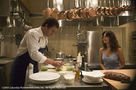
When it comes to comic dramas about marriage, it's hard to think of one with more realistic, adult sensibility than Spanglish. I was inspired by some of the writing in As Good As It Gets, and because I'm outlining a marriage-centered comedy myself, I watched Spanglish again. Like the other script, I found that I loved scenes and Brooks' insight into love and need. He follows characters' crises rather than stamping them into a boilerplate genre structure.
Here's what's great and strange about Spanglish: no antagonist. John Clasky, superstar chef, fights himself and wins. Review with me: John's brilliantly neurotic wife Deborah? Obstacle, distraction, disappointment: yes. Not an antagonist. His success? His restaurant manager? His sous-chef? Obstacles, yes. What about Flor, the breathtakingly beautiful Mexican house help? No. He falls for her, steps right up to the temptation to break his marriage wide open, totters on the verge, and disappointed, turns back by force of will.
John fights his heroic battle with daily life - to have time with his family, to keep peace at home, to encourage his kids, to support and forgive his deeply needy wife. No surprise, I should have known, from the man who shaped the Simpson's, where family is a bulwark against the madness of impersonal forces like work, school, money, media, etc. From time to time John Clasky takes great joy in his daily life. In one scene, he forgoes the perfect fried egg sandwich to take a dressing down by Flor. (Throughout, the edgy sense that he's comfortable at home but may be called to account at any moment is palpable.) He takes is medicine, turns a more biting accusation on Flor, and takes up that sandwich.
I have to say, I'm not sure I like it, but it's damn well done. I mean that it's easier to write and follow a story when the antagonist is clear. But that's not typical; you and me, we're not heroes. But I think Brooks thinks we are: we want to be loved, we want to be good, we want a little joy. And John Clasky takes up Thor's hammer every day and fights for it. Just like us.
Best line of the movie: "Right now, dear, your low self esteem is just good common sense."
- Evelyn Wright (Cloris Leachman) to her daughter Deborah Clasky (Tea Leoni).
* John's Critique Rubric: For educational purposes only. It's hard to make a great movie: Respek, bro! Or as the yogi says, Namaste.
Sunday, February 26
'As Good As It Gets': The Second Act Stall *
Thanks to Karl Igelsias (See Our Craft, here), I took on a close reading of this script to look at characterization. The first forty pages demonstrate great characterization of complex and nearly impossible people. Melvin Udall first among them. So, thanks Karl. I think your Creative Screenwriting story is as good as self-instruction gets.
The movie left me disappointed, but I couldn't remember why. There's a nagging suspicion that the reluctant romance between Carol (Helen Hunt) and Melvin (Jack Nicholson) repelled me. So why bother with this exercise? Because the script is not the movie.
Reading it, I was damned impressed with comedy writing that avoids slam-bang of the kind of movies that make huge money fast. Incidentally, this James J. Brooks and Mark Andrus script is the seventh top grossing rom-com since 1978 (Box Office Mojo). Instead, I found clever, situational, and low-decibel stories about the timeless question: what is true love?
The opening scene is a perfect example of character exposition demonstrating the protagonist's flaws and strengths, and announcing Melvin Udall's need: this romance writer doesn't know what love is. His desire is to control his environment, and the more he stumbles into comically anarchic relationships with his neighbor and waitress, the more his world comes apart, letting real love in. (Sigh)
But the story stalled when Melvin engineers a trip to Baltimore with Carol and Simon, his neighbor. You'll remember that Simon was beaten by thieves in his own home. His treatment bankrupts him. He capitulates to his friend Frank's plan to ask his parents for money. Since Melvin made arrangements to get a good doctor on the case, Carol finally feels a bit of ease about her very sick son Spencer. Melvin volunteers to drive Simon to Baltimore so that he can give Carol a day off and try to impress her as a love interest.
During the drive to Baltimore, the script slows down. No, it pulls onto the shoulder and turns off the radio. Melvin and Carol temporarily move to the background, Simon moves to the fore with a long explanation of why his father threw him out, why he has no relationship with his mother, and why they cannot speak. It's exposition and it's late and it's all reported by Simon. Weirdly, Carol pulls over - stops the forward motion of the story - to hear Simon pull the painful threads of his life-story sweater.
It was a deliberate choice. I concede that the writers needed the information and the moment to contrast with Simon's decision not to beg for cash and instead turn for home. But Simon's confessional doesn't reveal enough about any of the main characters to have spun down the story momentum. While it puts pressure on Melvin to get Carol to pay attention to him, not Simon, Melvin doesn't reveal new traits or resources to do so. And the script doesn't regain its stride until the three return to New York.
As a side note, "things happen" to Simon, but it is Melvin's story. Simon's dog incites Melvin to dump it down the trash chute. Simon is beaten nearly to death, but Melvin calls 911. Simon is driven to financial ruin, but Melvin drives him to Baltimore. Simon loses his friends. Simon travels to Baltimore. Melvin responds, or is trapped into responding, to each of these. Dramatically, they are dependent. There's no story without Simon. There's no inner conflict without Melvin. It turns out that the movie left me cold because these two characters together make one man, but they don't form the kind of bond that shows us they recognize it.
I'm going to subject myself to the movie again, but in the meantime, fans of the script or movie should get out your flensing knives. Agree or disagree?
* John's Critique Rubric: For educational purposes only. It's hard to make a great movie: Respek, bro! Or as my friend the yogi says it, Namaste.
The movie left me disappointed, but I couldn't remember why. There's a nagging suspicion that the reluctant romance between Carol (Helen Hunt) and Melvin (Jack Nicholson) repelled me. So why bother with this exercise? Because the script is not the movie.
Reading it, I was damned impressed with comedy writing that avoids slam-bang of the kind of movies that make huge money fast. Incidentally, this James J. Brooks and Mark Andrus script is the seventh top grossing rom-com since 1978 (Box Office Mojo). Instead, I found clever, situational, and low-decibel stories about the timeless question: what is true love?
The opening scene is a perfect example of character exposition demonstrating the protagonist's flaws and strengths, and announcing Melvin Udall's need: this romance writer doesn't know what love is. His desire is to control his environment, and the more he stumbles into comically anarchic relationships with his neighbor and waitress, the more his world comes apart, letting real love in. (Sigh)
But the story stalled when Melvin engineers a trip to Baltimore with Carol and Simon, his neighbor. You'll remember that Simon was beaten by thieves in his own home. His treatment bankrupts him. He capitulates to his friend Frank's plan to ask his parents for money. Since Melvin made arrangements to get a good doctor on the case, Carol finally feels a bit of ease about her very sick son Spencer. Melvin volunteers to drive Simon to Baltimore so that he can give Carol a day off and try to impress her as a love interest.
During the drive to Baltimore, the script slows down. No, it pulls onto the shoulder and turns off the radio. Melvin and Carol temporarily move to the background, Simon moves to the fore with a long explanation of why his father threw him out, why he has no relationship with his mother, and why they cannot speak. It's exposition and it's late and it's all reported by Simon. Weirdly, Carol pulls over - stops the forward motion of the story - to hear Simon pull the painful threads of his life-story sweater.
It was a deliberate choice. I concede that the writers needed the information and the moment to contrast with Simon's decision not to beg for cash and instead turn for home. But Simon's confessional doesn't reveal enough about any of the main characters to have spun down the story momentum. While it puts pressure on Melvin to get Carol to pay attention to him, not Simon, Melvin doesn't reveal new traits or resources to do so. And the script doesn't regain its stride until the three return to New York.
As a side note, "things happen" to Simon, but it is Melvin's story. Simon's dog incites Melvin to dump it down the trash chute. Simon is beaten nearly to death, but Melvin calls 911. Simon is driven to financial ruin, but Melvin drives him to Baltimore. Simon loses his friends. Simon travels to Baltimore. Melvin responds, or is trapped into responding, to each of these. Dramatically, they are dependent. There's no story without Simon. There's no inner conflict without Melvin. It turns out that the movie left me cold because these two characters together make one man, but they don't form the kind of bond that shows us they recognize it.
I'm going to subject myself to the movie again, but in the meantime, fans of the script or movie should get out your flensing knives. Agree or disagree?
* John's Critique Rubric: For educational purposes only. It's hard to make a great movie: Respek, bro! Or as my friend the yogi says it, Namaste.
Wednesday, February 22
When Software Works, You Just Want to Kiss Someone
Can I kiss someone at Sage? Okay, frankly, not just anyone, but maybe a cute developer who looks something like Diablo Cody, more or less?
I used to use Pluck, the newsreader plug in, in Internet Explorer. It was light, clean, versatile, and gave me lots of control over how I displayed, read, and deleted new feed entries. Then I discovered Firefox. Totally turned my life around. Well, things were slow just then.
Pluck for Firefox is a different animal. You may like it. Good. Feh. I gave up the control I so love and have been bereft until last week. Enter Sage, which is everything I loved about Pluck, but made for Firefox. Easy to use, lots of control, easier than ever feed detection. Me likey!
And it's great with shallots and white wine as a marinade for chicken.
I used to use Pluck, the newsreader plug in, in Internet Explorer. It was light, clean, versatile, and gave me lots of control over how I displayed, read, and deleted new feed entries. Then I discovered Firefox. Totally turned my life around. Well, things were slow just then.
Pluck for Firefox is a different animal. You may like it. Good. Feh. I gave up the control I so love and have been bereft until last week. Enter Sage, which is everything I loved about Pluck, but made for Firefox. Easy to use, lots of control, easier than ever feed detection. Me likey!
And it's great with shallots and white wine as a marinade for chicken.
Taking it Outdoors

The Banff Mountain Film Festival annually brings two nights of adventure movies to nearly 185 locations around the US. It's a crunchy, boho pair of nights that allow you to see, for example, a guy ski off nutty vertical drops and land in deep snow, more or less on his tale. Last year a pair of German climbers scaled Eiger using equipment identical to that of the first successful climber to reach the summit. And before that, extreme trampers, who filmed themselves hopping fences and doing stunts on backyard trampolines.
The stories often stink. Which is liberating, really. The movies focus on, say, experts doing their near-death-defying thing, or carving vertical powder where no ski as ever broken the surface. Last night an eighty-year-old Pole paraglided into the valleys outside Grappa in Italy. Is he mad or is he mugging? The footage just isn't there to show us . And since their feats can't be our feats, the story could answer the question, "Why?" But few do.
A long "mountain culture" documentary, The Magic Mountain, fails to show us, after 50 minutes, who the sacrificing subject of the movie is. She started an NGO in the Lahdak province of India after seeing the poverty during a mountaineering trip. And you know, it's up to the audience to decide. I thought she was running from family, from Western society, from any conception of competition and success. And if the footage is any indication, for all the good she plainly does, she has no clue who she is either. I'm grateful this saintly promo showed us that she may also be nuts.
Tuesday, February 14
Happy Valentine's Day in Production
Love is like this: You do it for free, but it costs you plenty. You lose your innocence and learn things you will be glad of, but first you feel creepy and you feel glad much much later. You think you'll never be good enough. Then you accept that you're not good enough. Then it's not you, it's her (or whatever). You're right. But you can't help yourself because it's good and getting better, better than anything so far. So you show up one more time, feeling tenative but hoping to feel that bouyant, this-could-be-perfect, "we could see the clouds separate" again and actually touch the ineffable. Yeah, love is like that.
Turns out, so is having an internship at a small production company, which I've recently landed. Folks asked me not to say much about what goes on there, so I won't. I'm reading and commenting on scripts, though this falls short of coverage - very informal place.
I'm encouraged. Because now that I see other scripts in development, I think that my work doesn't suck. Is good ever good enough? Now I know the answer: No. And I understand how important, crucial it is to love and champion your work. I haven't sat in full gale of a screenwriter on a mission. But I can see how "good" can be transformed into "potentially great" with a big ration of love and umph behind it. But great should still be great on the page. I don't think I've seen it yet. Deep, fresh, and bubbly; I'm looking forward to seeing that. Okay, so I haven't lost my innocence entirely, have I?
Turns out, so is having an internship at a small production company, which I've recently landed. Folks asked me not to say much about what goes on there, so I won't. I'm reading and commenting on scripts, though this falls short of coverage - very informal place.
I'm encouraged. Because now that I see other scripts in development, I think that my work doesn't suck. Is good ever good enough? Now I know the answer: No. And I understand how important, crucial it is to love and champion your work. I haven't sat in full gale of a screenwriter on a mission. But I can see how "good" can be transformed into "potentially great" with a big ration of love and umph behind it. But great should still be great on the page. I don't think I've seen it yet. Deep, fresh, and bubbly; I'm looking forward to seeing that. Okay, so I haven't lost my innocence entirely, have I?
Thursday, February 9
Mysterious Skin
The answer to the question, "Why make this movie?" is, I think, because you're not coming from or going to the places these boys know. Thank god. The movie is the stories of Neal, a charismatic and desperate boy prostitute and Brian, a desperately certain believer that he was visited by aliens. Each follows a path that leads them to each other, and the truth of what happened when they last knew each other as Little League teammates.
This movie was hell to watch. It begins with cinematic flourishes that disappear too early, exposing the audience to Neal's descent into increasingly threatening, ultimately brutal, encounters with johns. The audience's anxiety comes from a real fear of brutality they'll see in Neal's next scene. Sadly, a distant second fear arises over what might happen to Neal. Flip the importance of these fears and we'd have had a much better movie.
Decisions reveal the character and story in a moment, so when they're squandered, cripes but your heart sinks. At a crucial turning point in the second act, Neal, who is looking forward to going home for Christmas (it's not clear why), does one last john on his way to the airport. This rough trade nearly kills him. Then he appears at his mother's house, claiming he was mugged. Neal had already taken a stand-up job and seemed to stick with it. His whole conception of sex and affection was blown open through an evening with an HIV-positive john who simply wanted him to rub his back. Neal was just turning into a human being. Why this last trick? Habit, self destructiveness? This decision should have told us everything about Neal. It only shows us that his best friend Wendy was right all along. And that's too little.
When Neal and Brian finally meet, they return to the scene of the transforming moment of their lives. Neal narrates as Brian loses his alien abduction alibi and acknowledges that he was sexually molested. But the emotional payoff falls short: Neal's return is vaguely motivated; Brian's immediate trust in Neal seems impossible to believe; Wendy Peterson is the voice of concern, but a character who doesn't act on that concern, a Cassandra with too much mascara; Eric, and friend and the intermediary, appears not to have a point of view despite of his affection for Brian and his love for Neal. After the brutality of the story, the story owed us tragedy. Or comedy. Or philosophy. The two boys collapsed in grief in the dark from a high POV is too little of any of these.
This movie was hell to watch. It begins with cinematic flourishes that disappear too early, exposing the audience to Neal's descent into increasingly threatening, ultimately brutal, encounters with johns. The audience's anxiety comes from a real fear of brutality they'll see in Neal's next scene. Sadly, a distant second fear arises over what might happen to Neal. Flip the importance of these fears and we'd have had a much better movie.
Decisions reveal the character and story in a moment, so when they're squandered, cripes but your heart sinks. At a crucial turning point in the second act, Neal, who is looking forward to going home for Christmas (it's not clear why), does one last john on his way to the airport. This rough trade nearly kills him. Then he appears at his mother's house, claiming he was mugged. Neal had already taken a stand-up job and seemed to stick with it. His whole conception of sex and affection was blown open through an evening with an HIV-positive john who simply wanted him to rub his back. Neal was just turning into a human being. Why this last trick? Habit, self destructiveness? This decision should have told us everything about Neal. It only shows us that his best friend Wendy was right all along. And that's too little.
When Neal and Brian finally meet, they return to the scene of the transforming moment of their lives. Neal narrates as Brian loses his alien abduction alibi and acknowledges that he was sexually molested. But the emotional payoff falls short: Neal's return is vaguely motivated; Brian's immediate trust in Neal seems impossible to believe; Wendy Peterson is the voice of concern, but a character who doesn't act on that concern, a Cassandra with too much mascara; Eric, and friend and the intermediary, appears not to have a point of view despite of his affection for Brian and his love for Neal. After the brutality of the story, the story owed us tragedy. Or comedy. Or philosophy. The two boys collapsed in grief in the dark from a high POV is too little of any of these.
Monday, February 6
Reducing Well-Intentioned Mistakes by One
Thanks to all of you have gave me online and offline advice about whether to try acting in a community theater play. I wish you could have seen the auditions. When I announced that I'd do a few minutes from the second act monologue of Christopher Durang's Laughing Wild, the director said, "Oh good!"” He laughed and said "Excellent," at the end. That'’s good, right?
Here's a lesson from the audition. A giant blind woman (I mean, 5' 11", 200 lbs) declaimed the Dolly Levy speech from Thornton Wilder's The Matchmaker in which she asks her dead husband permission to wed Mr. Vandergelder. It's a long monologue. Oh, long! At one point she chopped the air with both hands like the robot on Lost in Space (Warning! Warning!).
I don't know the speech well, but it calls for landing on the word "shattered," which through her very slight speech impediment came out as "sshhlattered." We forgave her, looking away. The second time around I was "“sshhlaken." But the third time, I thought I'd "sshhlatter" with laughter.
I was sure there was a role for this Venus of Willendorf, maybe as an armoire or hat tree. But the director tried her in the role of the countess. She was as broad and blousy an aristocrat as one could ever want. I hope she gets the role. She'’ll be sshhlplectacular.
Two or three people who've appeared in earlier productions by this company auditioned that night. They are good: bright and uniform on stage. I'm not sure I can even offer that. But I was looking for a way to learn about funny, not just by delivery but by revealing the desperation underneath. Because that's hard to write. So I'll wait for another production and another cast to learn what I'm looking for.
Here's a lesson from the audition. A giant blind woman (I mean, 5' 11", 200 lbs) declaimed the Dolly Levy speech from Thornton Wilder's The Matchmaker in which she asks her dead husband permission to wed Mr. Vandergelder. It's a long monologue. Oh, long! At one point she chopped the air with both hands like the robot on Lost in Space (Warning! Warning!).
I don't know the speech well, but it calls for landing on the word "shattered," which through her very slight speech impediment came out as "sshhlattered." We forgave her, looking away. The second time around I was "“sshhlaken." But the third time, I thought I'd "sshhlatter" with laughter.
I was sure there was a role for this Venus of Willendorf, maybe as an armoire or hat tree. But the director tried her in the role of the countess. She was as broad and blousy an aristocrat as one could ever want. I hope she gets the role. She'’ll be sshhlplectacular.
Two or three people who've appeared in earlier productions by this company auditioned that night. They are good: bright and uniform on stage. I'm not sure I can even offer that. But I was looking for a way to learn about funny, not just by delivery but by revealing the desperation underneath. Because that's hard to write. So I'll wait for another production and another cast to learn what I'm looking for.
Thursday, February 2
The Soundtrack, or Tell Me How I Should Feel When Writing Checks
Click on the title of the post to find a new discovery of mine: StreamingSoundtracks.com. I suppose I have to thank iTunes for loading this link in the latest release (See Radio/Eclectic).
I started listening to this donation- and community-supported shuffle service the other day while writing. I was completely distracted by the changes in mood and tone and the nagging question, "What the heck movie was that from?"
If, to be reductive, film music tells us how to feel about what we see, I've found the perfect streaming music for bill paying, lurching as it does from pathos to elation, from comedy to horror.
I started listening to this donation- and community-supported shuffle service the other day while writing. I was completely distracted by the changes in mood and tone and the nagging question, "What the heck movie was that from?"
If, to be reductive, film music tells us how to feel about what we see, I've found the perfect streaming music for bill paying, lurching as it does from pathos to elation, from comedy to horror.
Should Screenwriters Act? I mean, try to, for educational purposes
Because I have my doubts. I tried out for a play yesterday. Namely You Can't Take It With You (Kaufman and Hart). And having seen this company's previous productions, I know that the right combination of material and amateurs comes off. Note my dubiousness.
A year or so ago a film guy said to me that acting was good for screenwriters. And actors I talk to tell me something similar. They want complex, shifting emotion and range within a role. They want admirable action. Of course, they want screen time, short of anything else.
So the logic runs that a screenwriter playing a high-strung IRS agent or an exiled Czarist Russian dance master (and professional remorrah) gets to see and feel what it takes to serve up characters who are as interesting to play as they are interesting to watch. Of course, this spec monkey wants to be the romantic lead. And that's because I'm not an actor. Daffy Ed, bombastic Boris, sense-itself Grandpa are the best parts. If I were an actor, I'd know that as well as I know when it's time to go in for a tanning tune-up.
So, how many of you have performed in shows or film?
Did you learn something valuable?
Or did you just find yourself drinking beer after rehearsals with the stunning (and impossible) actresses (...hoping and trying not too hard - maybe, definitely tonight, no, no, definitely only a maybe still...)?
A year or so ago a film guy said to me that acting was good for screenwriters. And actors I talk to tell me something similar. They want complex, shifting emotion and range within a role. They want admirable action. Of course, they want screen time, short of anything else.
So the logic runs that a screenwriter playing a high-strung IRS agent or an exiled Czarist Russian dance master (and professional remorrah) gets to see and feel what it takes to serve up characters who are as interesting to play as they are interesting to watch. Of course, this spec monkey wants to be the romantic lead. And that's because I'm not an actor. Daffy Ed, bombastic Boris, sense-itself Grandpa are the best parts. If I were an actor, I'd know that as well as I know when it's time to go in for a tanning tune-up.
So, how many of you have performed in shows or film?
Did you learn something valuable?
Or did you just find yourself drinking beer after rehearsals with the stunning (and impossible) actresses (...hoping and trying not too hard - maybe, definitely tonight, no, no, definitely only a maybe still...)?
Transamerica
In a clever double-meaning, Transamerica is a picaresque in which Bree, the transgender woman in process, crosses the nation in a beat-up station wagon. She turns the American family trip upside down. This is no vacation, but a trial that tests her desire to become the woman she knows she was meant to be.
Spoilers follow! Just one week from the transforming surgery that will complete the process to make her a woman, Bree learns that she'd fathered a son years ago when she was Stanley and married. She gets a call from a NYC juvenile lockup where a kid named Toby is being held for prostitution.
Bree believes it's a scam. But haunted nevertheless, she reports the strange call to her supportive therapist, Margaret. Bree's adjustment to becoming a woman must have been rocky over the three years of therapy and cosmetic surgery. Margaret insists that Bree see the boy before she approves Bree's final operation, "So you're not sorry about leaving anything behind." (Or a similar sentiment; the quote is an approximation.)
With the clock ticking on her surgery date, she flies out to meet the boy, Toby, and bail him out. She tries to drop him, giving him 100 bucks, and then when she takes pity on him, drives him to his stepfather's house. A bitter history emerges, violence breaks out, and she agrees to take Toby to L.A.
What's great about this movie is it's second half. From the point she meets the Indian who develops a discrete crush on her to the moment Alex runs away from Bree's parents' Phoenix house to the very end. The metaphor and sometimes shifting tone of the movie drop away and we see the new woman, flirting and adored. The story stays aloft throughout the visit (or siege) with her parents, not because of the evident comedy and tragedy of the sequence, but because all but one of her emotions is laid bare. That last one - the pain of loss shot through the moment she's achieved her goal - she saves her return home.
Other reasons to admire Transamerica:
Spoilers follow! Just one week from the transforming surgery that will complete the process to make her a woman, Bree learns that she'd fathered a son years ago when she was Stanley and married. She gets a call from a NYC juvenile lockup where a kid named Toby is being held for prostitution.
Bree believes it's a scam. But haunted nevertheless, she reports the strange call to her supportive therapist, Margaret. Bree's adjustment to becoming a woman must have been rocky over the three years of therapy and cosmetic surgery. Margaret insists that Bree see the boy before she approves Bree's final operation, "So you're not sorry about leaving anything behind." (Or a similar sentiment; the quote is an approximation.)
With the clock ticking on her surgery date, she flies out to meet the boy, Toby, and bail him out. She tries to drop him, giving him 100 bucks, and then when she takes pity on him, drives him to his stepfather's house. A bitter history emerges, violence breaks out, and she agrees to take Toby to L.A.
What's great about this movie is it's second half. From the point she meets the Indian who develops a discrete crush on her to the moment Alex runs away from Bree's parents' Phoenix house to the very end. The metaphor and sometimes shifting tone of the movie drop away and we see the new woman, flirting and adored. The story stays aloft throughout the visit (or siege) with her parents, not because of the evident comedy and tragedy of the sequence, but because all but one of her emotions is laid bare. That last one - the pain of loss shot through the moment she's achieved her goal - she saves her return home.
Other reasons to admire Transamerica:
- Kick-ass performance by Felicity Huffman, not to mention that Bree is well-hung.
- The overhanging suspense of what will happen if and when people around her discover she is, for now, a hermaphrodite.
- Periodic wittiness of the script: In response to Bree's sister offering her mother's feathered pink wrap to wear, Bree says, "I'm a transexual, not a transvestite."
Tuesday, January 31
Visceral, yes, but...
"Sometimes you're so beautiful it just gags me."
- Tony Kirby to Alice Sycamore in You Can't Take it With You (1938)
- Tony Kirby to Alice Sycamore in You Can't Take it With You (1938)
Sunday, January 29
And another thing to blame on the brain
Like everyone who has an inferiority complex about comprehending the science of our times, I'm fascinated by the drumbeat of insights - of varying significance - about what happens in the brain. Two recent articles in the New York Times have me reflecting on what to pay attention to when writing stories.
Recently, a study showed that we don't want to know, and that we fight against knowing, facts that contradict our closely held opinions. A Shocker: Partisan Thought is Unconscious tells how political partisan thinking "is often predominantly emotional." The rational brain was quiet - dark on the MRI - when confronted with facts the listeners didn't like. It reminds me of a friend who couldn't remember that Miles (Paul Giamatti) in Sideways was pathetically flawed. There was, if nothing else, his stealing money from his mother. "Oh, I forgot about that," she said. Once he's redeemed himself and reached out for love, he's transformed from pathetic creep. Which is another way of saying that my friend had forgiven him, forgetting the facts that no longer apply.
In other words, it doesn't matter much what they say. It matters what they do. Once we fall for a character, we're going to sort what we don't want to believe and follow our emotions.
Recently, a study showed that we don't want to know, and that we fight against knowing, facts that contradict our closely held opinions. A Shocker: Partisan Thought is Unconscious tells how political partisan thinking "is often predominantly emotional." The rational brain was quiet - dark on the MRI - when confronted with facts the listeners didn't like. It reminds me of a friend who couldn't remember that Miles (Paul Giamatti) in Sideways was pathetically flawed. There was, if nothing else, his stealing money from his mother. "Oh, I forgot about that," she said. Once he's redeemed himself and reached out for love, he's transformed from pathetic creep. Which is another way of saying that my friend had forgiven him, forgetting the facts that no longer apply.
In other words, it doesn't matter much what they say. It matters what they do. Once we fall for a character, we're going to sort what we don't want to believe and follow our emotions.
Yes, they're telling you how you feel
Mirror neurons, that is. These are a relatively new function of particular neurons and related complex structures that may explain why movies have the power to move us as few other art forms do. Empathy, it turns out, is not just an unconscious emotional capacity, it's built into our cells and molecules.
In a story in the New York Times, Sandra Blakeslee reports that recent research shows mirror neurons may account for such things as recognizing behavior and anticipating what happens next, and social emotions - shame, rejection, loss - which register directly in viewers who see others suffer such emotions.
And get this:
We feel what others feel, apparently, for the long-term survival and growth of the species. So folks, what we're handling when we write stories is the power to touch the spark and tinder of the thing we have in common, beneath all our differences. It's why we hate the feeling of being manipulated by stories, but cry anyway. It's why we back movies that come at us like an emotional tracheotomy going for the throat. And it's why we love the success of a great movie that's true. Not just the correct facts, but true feelings, telling us exactly our mirror neurons tell us with the power to keeping us alive and thriving.
In a story in the New York Times, Sandra Blakeslee reports that recent research shows mirror neurons may account for such things as recognizing behavior and anticipating what happens next, and social emotions - shame, rejection, loss - which register directly in viewers who see others suffer such emotions.
And get this:
"The human brain has multiple mirror neuron systems that specialize in carrying out and understanding not just the actions of others, but their intentions, the social meaning of the behavior and their emotions."
"Mirror neurons allow us to grasp the mind of others through...direct simulation, by feeling...."
We feel what others feel, apparently, for the long-term survival and growth of the species. So folks, what we're handling when we write stories is the power to touch the spark and tinder of the thing we have in common, beneath all our differences. It's why we hate the feeling of being manipulated by stories, but cry anyway. It's why we back movies that come at us like an emotional tracheotomy going for the throat. And it's why we love the success of a great movie that's true. Not just the correct facts, but true feelings, telling us exactly our mirror neurons tell us with the power to keeping us alive and thriving.
Saturday, January 21
The Constant Gardener
I thought it had its heart in the right place, this movie. But where it should have a heart, it had a camera. Now, the editing, color, and overpowering framing of a bright, blank Kenya in early scenes offer so much promise. I’ll leave it to others to identify what went wrong in the choices of the DP and director. But the story cheated viewers out of nearly every moment of identification with human feeling.
First, expectations. The Constant Gardener could have been a thriller, a who-dunnit, a tragedy, a David v. Goliath crusade. Director Fernando Meirelles and screenwriter Jeffrey Caine could have woven together exciting combinations of these. The look and feel gives the impression that was their aim. But they repeatedly show and then steal questions we want answered: Is Justin’s wife really the dead woman found on the road? Answered. How is her death connected with her investigation into Three Bees corporation and its clinical trails? Answered. Did the British government play in a role? Answered. The Kenyan government? Answered. My friends? Liars and betrayers. By the midpoint when Justin is convinced that Tessa is a casualty of big pharma geopolitical profiteering, the viewer no longer knows what question matters. Justin gets on a train to Amsterdam without a plan, and so does the movie.
Why do Tessa, Justin, Arnold, and Sandy do, well, what they do? Love. But we do not see this, we hear it. It comes by conversation and incidental action. In a scene rife with possibility, Tessa lays in a hospital bed nursing a black newborn. The movie toys with us – is this the crusading Kenyan doctor’s child after all? – and then points us to the baby’s teen mother, who is dying nearby. Tessa is moved with compassion and outrage for the woman. But sharing the feeling demands knee-jerk sentimentalizing from the audience. We know nothing about the teenager or others like her. The filmmakers treat her death as an emblem not a person, much they way Tessa accuses the drug corporations of treating Africans as statistics. We do not feel because the moment is not particular.
Justin’s surrender to his own murder is the moment when I wanted to start throwing Milk Duds. Even if we had watching him face his assassins and drop the clip from his pistol, we could have called him oddly courageous because we saw his choice. It remains unclear why he felt so trapped that he should volunteer to be killed.
To cap the disappointments, at Justin’s funeral we learn that the late-appearing hero is – ta da! – Tessa’s cousin and lawyer, Ham. Justin made sure that Ham held the crucial evidence to would bring down the British senior diplomat Sir Bernard Pellegrin. While it was Justin’s unseen hand at work, the dramatic action belongs to a secondary character. And if this outing had been the first in a series of stylish third act revelations prepared and planned by the dead Justin, we would have cheered him as the avenging martyr. As it played, he wasn't clever, impassioned, good, or wise. And his company makes for a long two hours.
John’s critique rubric: Darkness Visible's critiques are for educational purposes only. It's hard to make a good movie. Respek, bro!
First, expectations. The Constant Gardener could have been a thriller, a who-dunnit, a tragedy, a David v. Goliath crusade. Director Fernando Meirelles and screenwriter Jeffrey Caine could have woven together exciting combinations of these. The look and feel gives the impression that was their aim. But they repeatedly show and then steal questions we want answered: Is Justin’s wife really the dead woman found on the road? Answered. How is her death connected with her investigation into Three Bees corporation and its clinical trails? Answered. Did the British government play in a role? Answered. The Kenyan government? Answered. My friends? Liars and betrayers. By the midpoint when Justin is convinced that Tessa is a casualty of big pharma geopolitical profiteering, the viewer no longer knows what question matters. Justin gets on a train to Amsterdam without a plan, and so does the movie.
Why do Tessa, Justin, Arnold, and Sandy do, well, what they do? Love. But we do not see this, we hear it. It comes by conversation and incidental action. In a scene rife with possibility, Tessa lays in a hospital bed nursing a black newborn. The movie toys with us – is this the crusading Kenyan doctor’s child after all? – and then points us to the baby’s teen mother, who is dying nearby. Tessa is moved with compassion and outrage for the woman. But sharing the feeling demands knee-jerk sentimentalizing from the audience. We know nothing about the teenager or others like her. The filmmakers treat her death as an emblem not a person, much they way Tessa accuses the drug corporations of treating Africans as statistics. We do not feel because the moment is not particular.
Justin’s surrender to his own murder is the moment when I wanted to start throwing Milk Duds. Even if we had watching him face his assassins and drop the clip from his pistol, we could have called him oddly courageous because we saw his choice. It remains unclear why he felt so trapped that he should volunteer to be killed.
To cap the disappointments, at Justin’s funeral we learn that the late-appearing hero is – ta da! – Tessa’s cousin and lawyer, Ham. Justin made sure that Ham held the crucial evidence to would bring down the British senior diplomat Sir Bernard Pellegrin. While it was Justin’s unseen hand at work, the dramatic action belongs to a secondary character. And if this outing had been the first in a series of stylish third act revelations prepared and planned by the dead Justin, we would have cheered him as the avenging martyr. As it played, he wasn't clever, impassioned, good, or wise. And his company makes for a long two hours.
John’s critique rubric: Darkness Visible's critiques are for educational purposes only. It's hard to make a good movie. Respek, bro!
Tuesday, January 17
Biting and quoting, from 'Some Came Running'
"A little talent to a writer means as much as a little talent to a brain surgeon."
- Dave Hirsh. Hard drinking, passionate misanthrope. Sometime writer.
- Dave Hirsh. Hard drinking, passionate misanthrope. Sometime writer.
Subscribe to:
Comments (Atom)